
MetroPlan Orlando is responsible for looking 25 years into the future and determining how we should plan for regional transportation. This long-range vision sets the course for all the work we do with our government and transportation partners. Welcome to the Metropolitan Transportation Plan. We hope you will explore the plan and give us your feedback.
WHAT IS THE MTP?
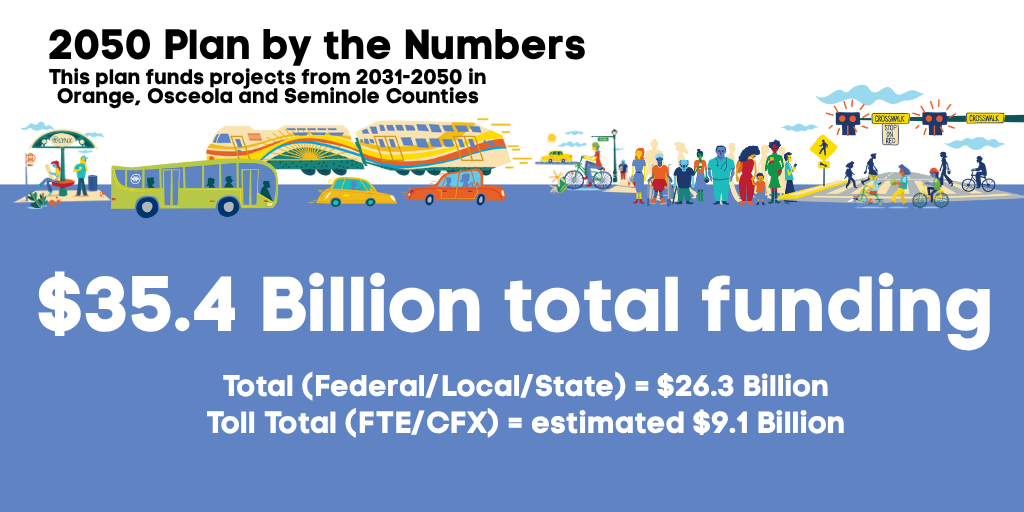
The Metropolitan Transportation Plan (MTP) establishes the vision for the transportation system in Orange, Osceola and Seminole counties. This plan for the year 2050 identifies current and future transportation needs and establishes a cost feasible plan of projects to fit expected revenues. Projects must be included in the plan to receive federal and state funding. The MTP is updated every five years to reflect the changing dynamics of the region.
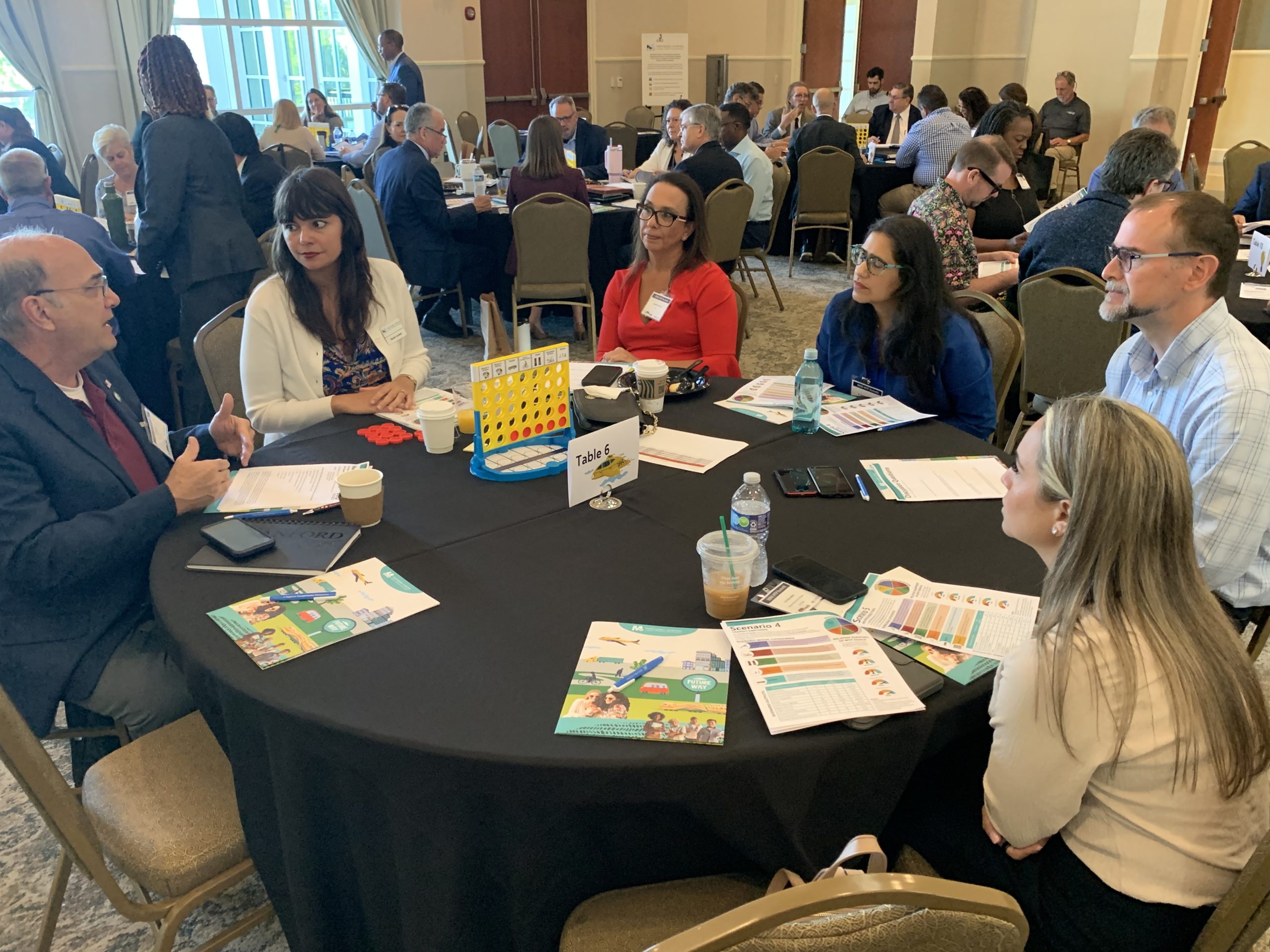
The 2050 Plan was created by examining the current transportation system, establishing goals and objectives, and gathering public input. A thorough technical analysis, including performance measures, was used to evaluate needs and look at various future scenarios that might affect the system. After coordinating with local government and transportation agency partners, the cost feasible plan – a list of projects the region can afford – was produced. The MetroPlan Orlando Board unanimously adopted the 2050 MTP on Dec. 10, 2025.
Journey to 2050: Metropolitan Transportation Plan Executive Summary
Our Journey to 2050 has been an ambitious ride. One we could not have embarked on alone. This Executive Summary highlights how the 2050 MTP was guided by feedback from our local partners, stakeholders, the community, and technical analysis.
PROJECTS & FUNDING
PLANNING PRINCIPLES
The 2050 Plan is guided by these planning principles:
- Safety: Provide a safe and secure transportation system for all users.
- Reliability: Provide a reliable transportation system across all modes for people and freight.
- Connectivity: Enhance lives through improved access to jobs and services for people of all ages and abilities.
- Community: Enhance the health and vitality of our region’s communities and environments.
- Prosperity: Strengthen our region’s economy
PLAN REVISIONS
The 2050 MTP is a living document that is updated periodically to maintain planning consistency with near-term transportation improvements with our region’s long-term vision for transportation. The document below provides a summary of approved amendments and modifications to the 2050 MTP, including hyperlinks to supporting materials.
2050 MTP – Summary of Plan Revisions as of March 2026
2050 MTP Chapters
The 2050 MTP is both multimodal and multi-faceted by design, and covers a wide range of topics, methodologies, processes, and findings as we document our transportation vision for 2050. Each chapter of the 2050 MTP is published below, with appendix items and supplemental documents published separately. If you have any questions on any of the topics addressed in these reports, please contact our 2050 Plan Project Manager, Taylor Laurent at (407) 481-5672 x306.
2050 MTP – Chapter 1 – Introduction
2050 MTP – Chapter 2 – Goals and Objectives
2050 MTP – Chapter 3 – Existing Conditions, Area Profile, and Travel Patterns
2050 MTP – Chapter 4 – Congestion Management Process
2050 MTP – Chapter 5 – Community Health and Housing
2050 MTP – Chapter 6 – Environmental Stewardship and Resilience
2050 MTP – Chapter 7 – Freight and Goods Movement
2050 MTP – Chapter 8 – Transit Element
2050 MTP – Chapter 9 – Regional Safety Element
2050 MTP – Chapter 10 – Active Transportation Needs Assessment
2050 MTP – Chapter 11 – TSMO Needs Assessment
2050 MTP – Chapter 12 – Roadway Needs Assessment
2050 MTP – Chapter 13 – Multimodal Needs
2050 MTP – Chapter 14 – Drivers of Change
2050 MTP – Chapter 15 – Public Participation Findings
2050 MTP – Chapter 16 – Prioritization Process
2050 MTP – Chapter 17 – Financial Resources
2050 MTP – Chapter 18 – Funding and Investment Policy
2050 MTP – Chapter 19 – Cost Feasible Plan – Revised March 2026
2050 MTP – Chapter 20 – Conclusion and Implementation Process
2050 MTP Appendices
Additional information about how the 2050 MTP was developed is included in the appendix items listed below. If you have any questions on any of the topics addressed in these reports, please contact our 2050 Plan Project Manager, Taylor Laurent at (407) 481-5672 x306.
2050 MTP – Appendix A – Data Source Guide
2050 MTP – Appendix B – Plans Review Summary
2050 MTP – Appendix C – O-D Analyses and Community Travel Profiles
2050 MTP – Appendix D – System Performance Report
2050 MTP – Appendix F – Community Health and Housing Supplemental Information
2050 MTP – Appendix G – Environmental Stewardship Supplemental
2050 MTP – Appendix H – Transit Needs
2050 MTP – Appendix I – Regional High Injury Network Transportation Needs and Opportunities
2050 MTP – Appendix J – Sidewalk Needs
2050 MTP – Appendix K – TSMO Strategies by Project Corridor
2050 MTP – Appendix L – Public Participation Plan
2050 MTP – Appendix M – Public Participation Documentation/Results
2050 MTP – Appendix N – Record of Public Comments
2050 MTP – Appendix O – Financial Resources Supplemental Information
2050 MTP – Appendix P – Transportation Project Cost and Complexity Estimations
2050 MTP – Appendix Q – Local Transportation Needs and Opportunities Planning Consistency
INTERACTIVE TOOLS
The 2050 Metropolitan Plan (MTP) Multimodal Viewer is an interactive, web-based map tool designed to help users explore identified multimodal transportation needs across the region. These projects represent a compilation of transportation needs identified throughout Orange, Osceola, and Seminole Counties. They were developed through a comprehensive planning process with input and collaboration from local transportation partners. The projects displayed in this dashboard are grouped into Needs Lists to make it easier to locate similar types of projects and to better understand their funding eligibility.

User Guide 2050 MTP Draft Needs Viewer
SUPPLEMENTAL DOCUMENTATION
If you want more information about any of the items included within the 2050 Plan, please take a look at our detailed master plans, evaluations, and other technical analysis below. If you have any questions on any of the topics addressed in these supplemental documents, please contact our 2050 Plan Project Manager, Taylor Laurent at (407) 481-5672 x306.
Technical Report – Congestion Management Process
Technical Report – Existing Conditions and Area Profile
Technical Report – Transit Vision Master Plan
Technical Report – Environmental Stewardship
Technical Report – Environmental Stewardship Appendix A – John Young Parkway
Technical Report – Environmental Stewardship Appendix B – Kirkman Bridge
Technical Report – Environmental Stewardship Appendix C – Kirkman Tunnel
Technical Report – Environmental Stewardship Appendix D – Lake Mary
Technical Report – Environmental Stewardship Appendix E – Palm Springs
Technical Report – Environmental Stewardship Appendix F – SR50
Technical Report – Environmental Stewardship Appendix G – SR482
Technical Report – Environmental Stewardship Appendix H – US192 Hoagland
Technical Report – Environmental Stewardship Appendix I – US192 Simpson
Technical Report – Environmental Stewardship Appendix J – US17/92 Railroad Crossing
Technical Report – Environmental Stewardship Appendix K – US17/92 Tunnel
Active Transportation Plan Final Report (April 2024)
Active Transportation Plan Technical Appendix (April 2024)
Active Transportation Facility Types
TSMO Master Plan Summary (2024)
TSMO Master Plan Appendix 1 – Documentation Review (2024)
TSMO Master Plan Appendix 2 – Existing Conditions Review (2024)
TSMO Master Plan Appendix 3 – Regional TIS Architectures (RITSA) (2024)
TSMO Master Plan Appendix 4 – Needs Assessment (2024)
TSMO Master Plan Appendix 5 – Prioritization Matrix (2024)
TSMO Master Plan Appendix 6 – Intersection Evaluation (2024)
TSMO Master Plan Appendix 7 – Project Strategies (2024)
TSMO Master Plan Appendix 8 – Funding Guidance (2024)
Path to 2050 Youth Activity Book
2050 MTP Brochure – Haitian Creole
STAFF CONTACTS
For more information, or to request a presentation about the 2050 MTP for your group, please contact:
Taylor Laurent – MTP@MetroPlanOrlando.gov
¿Hablas Español?
Giselle Valadez – MTP@MetroPlanOrlando.gov